
Solar cells that run small devices on indoor light
Perovskia prints custom perovskite solar cells in Switzerland for makers of IoT sensors, keyboards, wearables and shelf labels. The cell turns ordinary room light into power, so your device lasts longer on its battery or needs no battery at all.
500 luxoffice light
Printed perovskite cellturns light into power
400 µWfrom the cell
Sensor reports every 2.5 minno battery to change
Most devices live indoors. Our cells are printed for the light they actually get, from 200 lux in a warehouse to full sun.
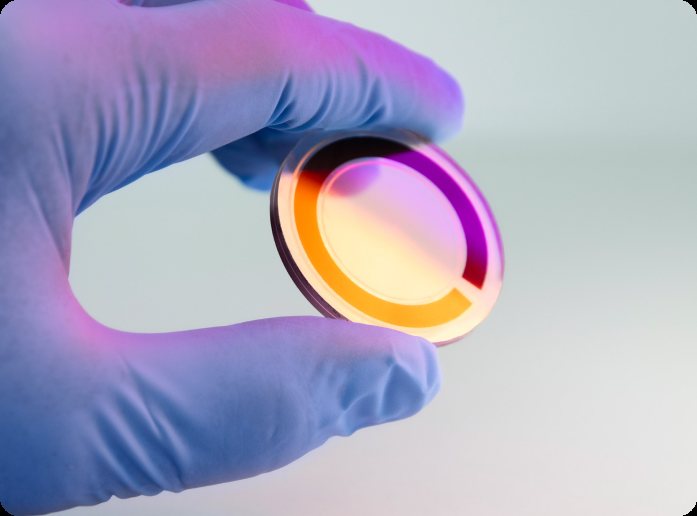
80 µW per cm²at 1,000 lux, validated by independent partners and customers.
10+ yearslifespan, so the cell outlives the battery it replaces.
Full visible spectrumabsorbed, which is why perovskite works under LED and daylight alike.
What your device gets
Same 10 cm² cell, five real lighting conditions. Tell us your power budget and we size the cell to it.
Warehouse aisle
200 lux160 µWa reading every 6 minOffice desk
500 lux400 µWa reading every 2.5 minRetail shelf
1,000 lux800 µWa reading every 75 sNext to a window
10,000 lux8 mWa reading every 8 sOutdoors, sun
100,000 lux80 mWcharges storage for the nightIllustrative model: Perovskia's published 80 µW/cm² at 1,000 lux scaled linearly, 10 cm² cell, about 60 mJ per long-range radio uplink.
Printed to the shape of your product
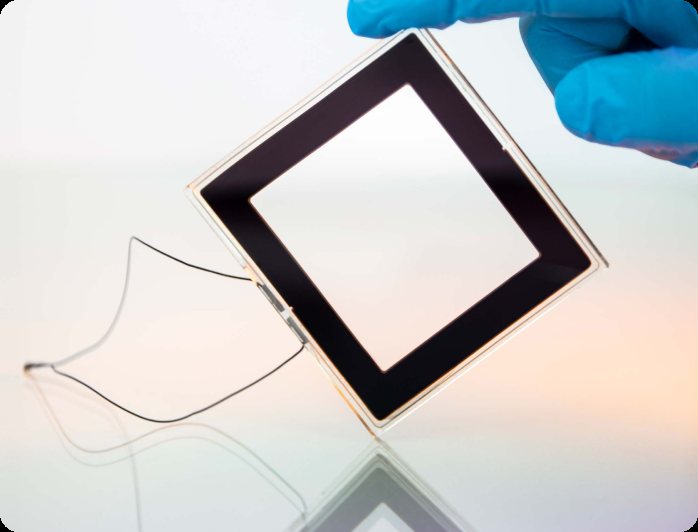
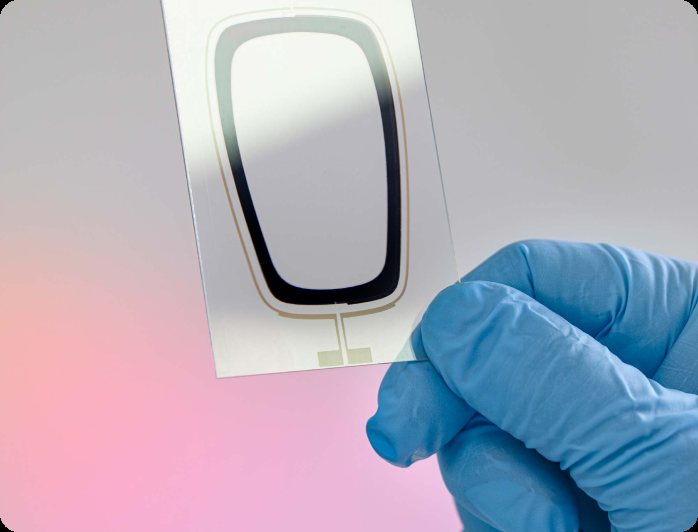
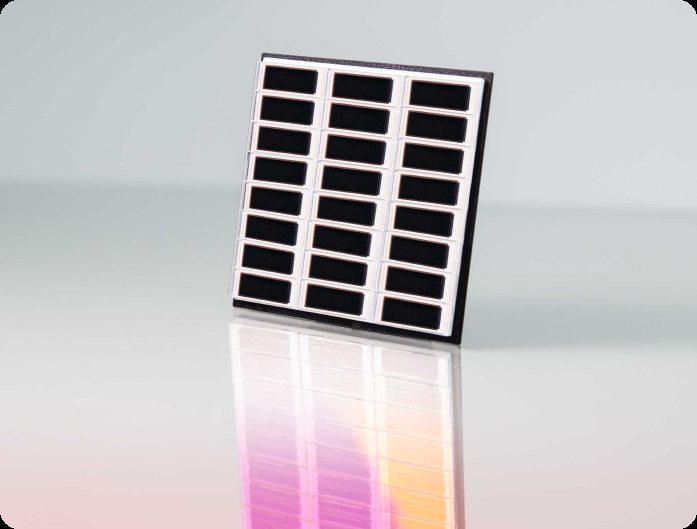
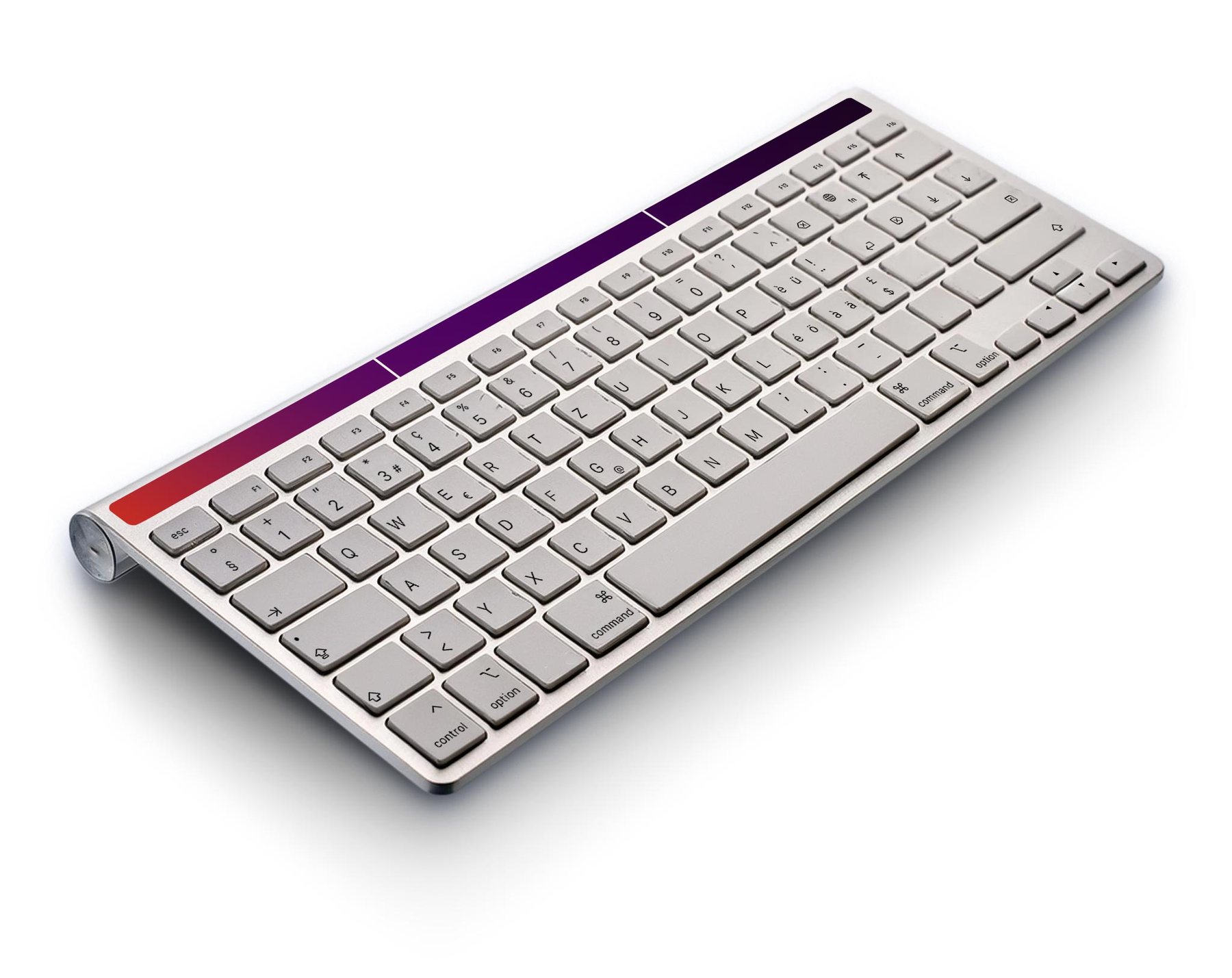
We print cells digitally, so a frame around a display, a ring on a watch case or a strip on a keyboard costs no new tooling. The cell follows the free surface, not the other way round.
Where the battery is the weak point
From power budget to production
Share your power needs
Voltage, average current, available surface and the light your device will see.
We design the cell
Shape, size and electrical layout printed to fit your housing.
Validate and demonstrate
Samples go into your prototype and are tested under your conditions.
Full-scale production
Printed in Aubonne on our automated line, scaling toward a million cells.

Made in Aubonne
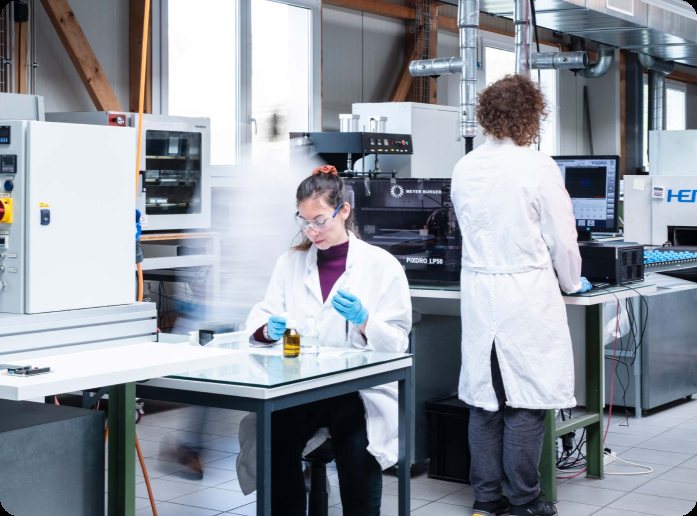
Our own production line
Lab and printing line in the Canton de Vaud, close to EPFL, with the backend of the process being automated for consistent quality.
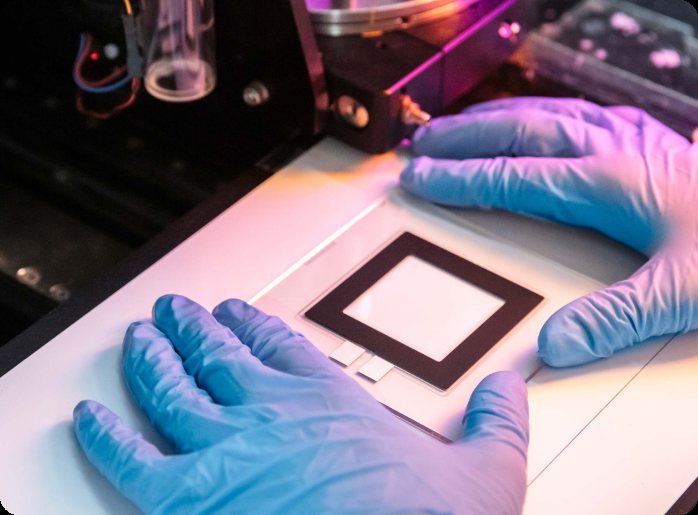
A spin-off of Empa
Born at the Swiss Federal Laboratories for Materials Science and Technology, with over three decades of thin-film solar expertise in the team.

Backed by the EIC Accelerator
A €2.25M grant secured in 2026 funds the scale-up toward a printing capacity of one million cells.
Order a sample kit
Tell us what your device needs and where it lives. Our engineers come back with a cell proposal and the output you can expect.
Perovskia Solar AG
Rue de l'Ouriette 129, CH-1170 Aubonne, Switzerland